
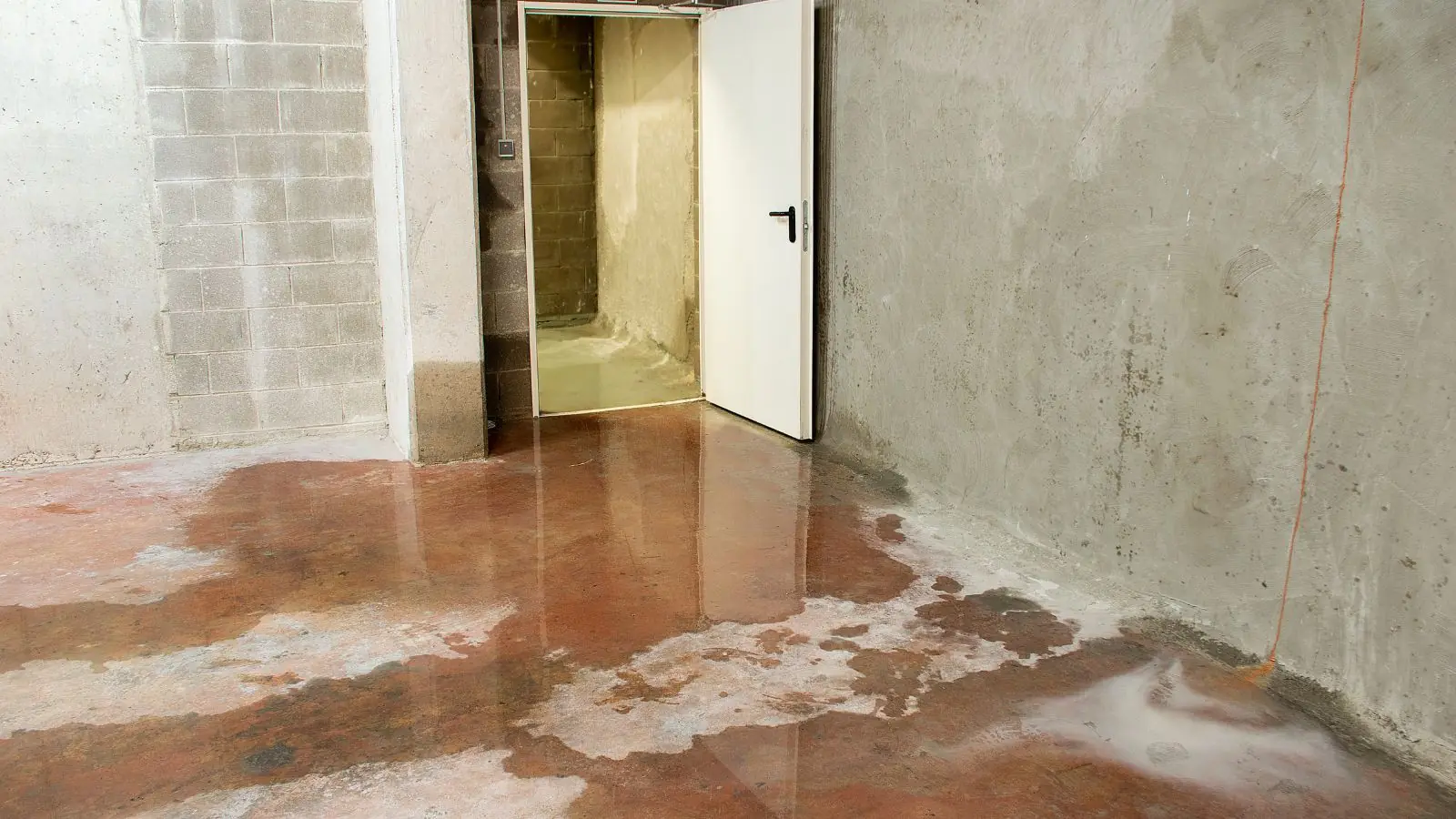
What we mean by a basement in North Texas
True basements are uncommon here, because most homes are slab-on-grade. This page is for the exceptions. It covers walkouts, finished daylight basements, sub-grade rooms, window wells, stairwells and storage rooms below grade.
If your home sits on a slab, a wet room on the ground floor belongs on our water damage cleanup page instead. Below-grade water stays trapped, so it takes pumps, patience and a drying plan.
Where basement water comes from
| Cause | What it means | What is done |
|---|---|---|
| Groundwater after heavy rain | Hydrostatic pressure pushes water through the floor joint or wall | Staged pumping, removal of wet pad and drywall, drying, then a waterproofing contractor for the cause |
| Window well or stairwell drain overflow | Surface water collects faster than the drain clears | Extract, dry the framing, ask a contractor about drainage |
| Sump pump failure | The pit fills and spills into the room | Pump out, dry in place, sump repair goes to a plumber or contractor |
| Appliance or supply leak in the room | A clean source, usually Category 1 at the start | Stop the leak, extract and dry before it ages |
| Drain or sewer backup | Contaminated water, Category 3 under ANSI/IICRC S500 | Contained cleanup as described on our sewage page |
Need basement water damage cleanup in Little Elm?
Call the 24/7 line.
Damp walls, a musty smell and squishy carpet downstairs
A lower level that smells musty, carpet that squishes underfoot or a white powder on the walls is telling you water is present. The trade term is basement water damage cleanup, and it begins with finding out where the water came from and how far it went.
Basement safety: power, depth and bad air
- Do not enter a flooded lower level if water touches outlets, a panel or cords.
- Deep water can hide steps, drains and floating debris, and it pushes hard against doors.
- Shut off power at the main breaker only if you can reach the panel dry.
- Never run a gas-powered pump or generator indoors, because exhaust is dangerous.
- Stay out if the water may include sewage, and call 911 for any electrical or gas hazard first.
Once the area is safe, call (972) 945-2885. We assess what you describe and plan the pump-out.
How we clear and dry a lower level
- Submersible pumps remove standing water in stages, so the soil and walls are not shocked by a sudden drop.
- Extraction units pull water from carpet, pad and flooring.
- Wet carpet pad is removed, and drywall is cut to the wicking line, usually above the visible stain.
- Moisture meters and thermal imaging cameras map what stayed wet inside the walls and slab.
- Air movers and LGR dehumidifiers dry the space, and dry air is kept sealed in from the rest of the house.
- An antimicrobial treatment goes onto cleaned surfaces before anything is closed up.
Staged pumping matters because emptying a flooded lower level too fast can stress the walls. The goal is steady removal, not speed alone.
Rain, the lake and your flood map
NWS Dallas/Fort Worth climate normals show roughly 37 inches a year, with a 4.78 inch May and a 4.37 inch October the wettest months. If your lower level takes water, those months are when to check window wells and downspouts.
Little Elm sits on a flood-control lake, per the Corps of Engineers. Check the FEMA flood map for your address, because a mapped zone changes what to ask your agent about flood coverage.
For large storm or lake water in more than one room, see flood damage restoration. Mold on the walls after water belongs to mold remediation, and we point there rather than repeat it.
What we do not do in a basement
We dry and restore. We do not waterproof, install drain tile, put in a sump pump, regrade or repair foundation cracks. Those are for a waterproofing or foundation contractor, and they matter if water returns every storm.
We cover homes in The Colony and Frisco as well, where a few homes have walkout levels.
What drives the cost of basement cleanup
| Factor | Effect on the job |
|---|---|
| Water depth and source | Deeper water and Category 2 or 3 sources mean more pumping and cleaning |
| Finished or unfinished | Carpet, pad, drywall and trim add removal that bare concrete does not |
| Square footage and layout | Stairwells, closets and small rooms slow air flow and drying |
| Drying days and equipment | Below-grade rooms hold moisture, so more LGR dehumidifiers run longer |
| Rebuild scope | Flooring, drywall and paint after drying are priced separately |
Texas Department of Insurance guidance says home policies do not cover floods, and groundwater seepage is usually treated differently from a plumbing burst. Check your policy and ask your insurer which one fits. Want your real number? Call (972) 945-2885.
Mistakes to avoid downstairs
- Pumping everything out in one afternoon when the walls are still pressing in.
- Leaving wet carpet pad in place because the surface looks dry.
- Using a household fan alone and sealing the room back up.
- Storing boxes against a wall that has been wet.
- Repairing walls before your insurer has seen the damage.
Need basement water damage cleanup in Little Elm?
Call the 24/7 line.
Frequently Asked Questions
Do you respond the same day to a wet basement, or only for emergencies?
Ask us about a same-day visit, and our dispatch line runs 24/7. Call, describe the water, and we will tell you what can be done today and what to do while you wait.
My house has no basement. Is this the right page?
Probably not. Most homes here are slab-on-grade. If your wet space is a ground-floor room, our water damage cleanup page fits better. This page is for walkouts, sub-grade rooms and below-grade storage.
What does hydrostatic pressure mean?
It is water in the soil pressing against a below-grade wall or floor after heavy rain. It can push water through joints and cracks. We dry the result, and a waterproofing contractor fixes the cause.
My sump pump stopped. Can you replace it?
No. We pump out and dry the room. A plumber or waterproofing contractor installs or repairs the sump.
Is a wet basement covered by insurance?
It depends on the source. A burst pipe is often covered, while flood water and seepage usually are not. Check your policy and ask your insurer.
The wall has white powder and a musty smell. Is that mold?
Not always. White powder can be mineral deposits left behind by moisture. For mold questions, see our mold remediation page, and ask a licensed assessor about testing.