
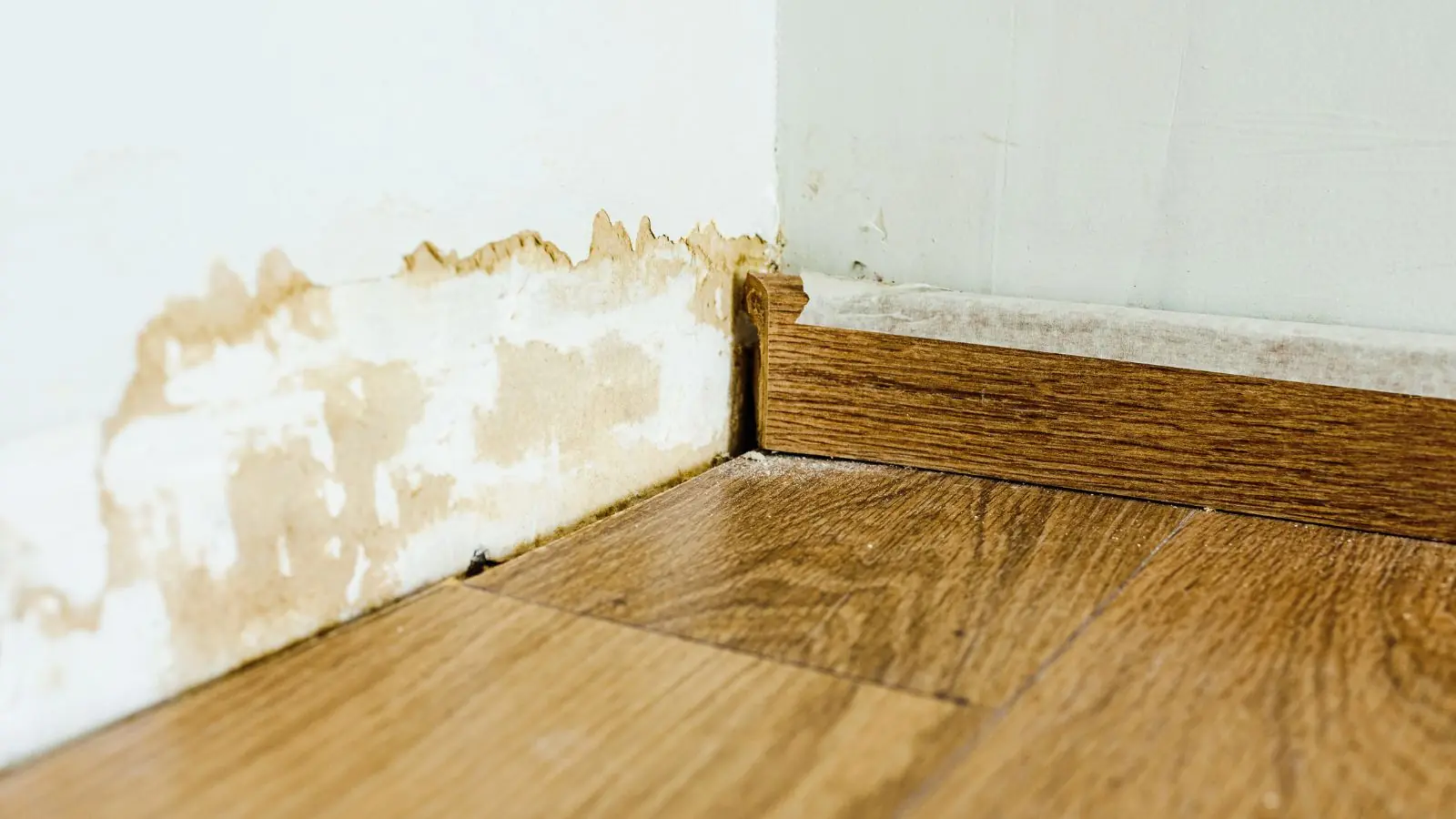
What water does to a wall
Drywall is gypsum between two layers of paper, and paper drinks water. Water climbs the wall from the floor, a process called wicking, and can rise well above the visible stain. It also arrives from inside the wall when a pipe or a drain line leaks in the cavity.
Behind the drywall sits insulation, framing and sometimes wiring, and all of it can stay wet long after the surface looks fine. Closing a wet cavity is how a small leak becomes a rebuild.
Paint is bubbling and the wall feels soft
Bubbling paint, a brown stain that keeps growing, a bulge at the baseboard, drywall that sags or gives under a thumb, and a damp smell from one wall are all the same warning. What we do about it is called water damage repair, starting with finding out how wet it is. Our water damage repair page covers the broad rebuild, and this page is about the wall.
Need wall and drywall water damage repair in Little Elm?
Call the 24/7 line.
Wall safety: wiring, outlets and what hides inside
Outlets and switches in a wet wall carry power. If water is running out of a fixture or an outlet, stay away, cut the breaker only if the breaker box is dry and reachable, and call the power company or 911 before you call us.
Older and newer walls can hide different things behind the surface, so do not cut into a wet wall yourself. Wear gloves and a mask around the dust, and keep children and pets away from opened cavities.
How wet drywall is judged
We use a moisture meter on the face of the wall, then compare readings from the floor up to find the wicking line. A thermal imaging camera shows cool, wet patches without cutting anything. Soft spots, sagging, a swollen paper face, staining and bubbling paint add to the picture.
| What you see | What it usually means | What is done |
|---|---|---|
| Bubbling paint, dry to the touch | Moisture trying to escape | Meter it, dry in place if readings are low |
| Stain with a firm wall | Old or small leak | Find the source, check the cavity |
| Soft spot or sagging | Gypsum saturated | Cut out the wet section |
| Swollen baseboard, wet wall bottom | Water wicked up from the floor | Flood cut above the line |
| Musty smell, no visible damage | Wet cavity or insulation | Open a small inspection hole and meter |
The flood cut, insulation and drying the cavity
A flood cut removes the wet lower part of the drywall in a straight line above where the water climbed. Insulation behind it, which holds water like a sponge, is usually removed. The cut lets air reach the studs and the back of the remaining wall.
Air movers push air into the opening, and LGR dehumidifiers pull the moisture out of the room. Studs are metered until they read dry, and our structural drying page explains how that end point is set. Crews follow the water categories in ANSI/IICRC S500, and the category sets how much has to come out.
Drywall can be dried in place when the water was clean, the exposure short and the board still firm. It is replaced when it is soft, contaminated or has stayed wet. Ceilings follow similar rules.
Mold watch inside the wall
Texas Department of Insurance says a leak can seed mold growth in as little as a day. Cavities are warm, dark and slow to dry, which is why they are checked before closing. If growth is found, mold remediation takes over, and ANSI/IICRC S520 is the standard for mold work.
What the wall rebuild looks like
- Patch or hang new drywall over dry framing.
- Tape and apply joint compound in coats, sanding between.
- Prime the repair so the paint does not flash.
- Match the texture to the surrounding wall.
- Paint, usually a full wall corner to corner so the color blends.
Never paint over wet drywall. Paint traps moisture, bubbles again and can hide a wet cavity. When the rebuild grows into a remodel, we hand the scope to you and a contractor, and ask the Town of Little Elm building department about permits for larger rebuilds.
Insurance and keeping samples
Texas Department of Insurance advises not making permanent repairs until your insurer has seen the damage. Keep removed drywall samples and photos until the adjuster has looked at them. Sudden and accidental water is often covered and gradual seepage often is not, so read the policy language and ask your insurer.
What decides the cost of wall repair
| Factor | How it shifts the plan |
|---|---|
| Water category | Dirtier water means added removal and disinfecting |
| Height of the wicking line | A higher cut means more drywall and insulation |
| Wall length and number of rooms | More wall means more labor and equipment |
| Drying days | Framing that is slow to dry needs more time |
| Finish level | Texture, paint and baseboard add rebuild scope |
A real figure depends on what the meter finds.
Want your real number? Call (972) 945-2885.
Wall mistakes to avoid
- Painting over a stain to hide it.
- Sealing a wall before the studs read dry.
- Cutting out drywall before photographing it.
- Leaving wet insulation in place.
- Skipping the source repair and patching only the surface.
Homeowners in Frisco and Prosper ask these questions as well.
Need wall and drywall water damage repair in Little Elm?
Call the 24/7 line.
Frequently Asked Questions
Can you look at a wet wall tonight or on a weekend?
Dispatch runs 24/7 and we try to book a visit the same day. While you wait, stop the water source and keep power off wet outlets.
How do you know if drywall can be saved?
A moisture meter, a thermal camera and a hand check for softness. Firm board with low readings often dries in place, and soft or contaminated board is cut out.
What is a flood cut?
It is a cut made above the line where water climbed. Everything wet below it comes out, so the cavity can dry.
Can I just paint over the stain?
No. Paint over wet drywall bubbles, peels and can hide mold. Dry it and confirm the readings first.
Do you finish and paint the wall?
We dry and remove. Taping, mudding, texture and painting are rebuild work, and if it becomes a remodel we hand the scope to you and a contractor.
Do I need a permit?
For larger rebuilds, ask the Town of Little Elm building department. Do not assume either way.